
Mos Health Journal
We Raised $1.1M to Build the Health System the Workday Has Been Missing
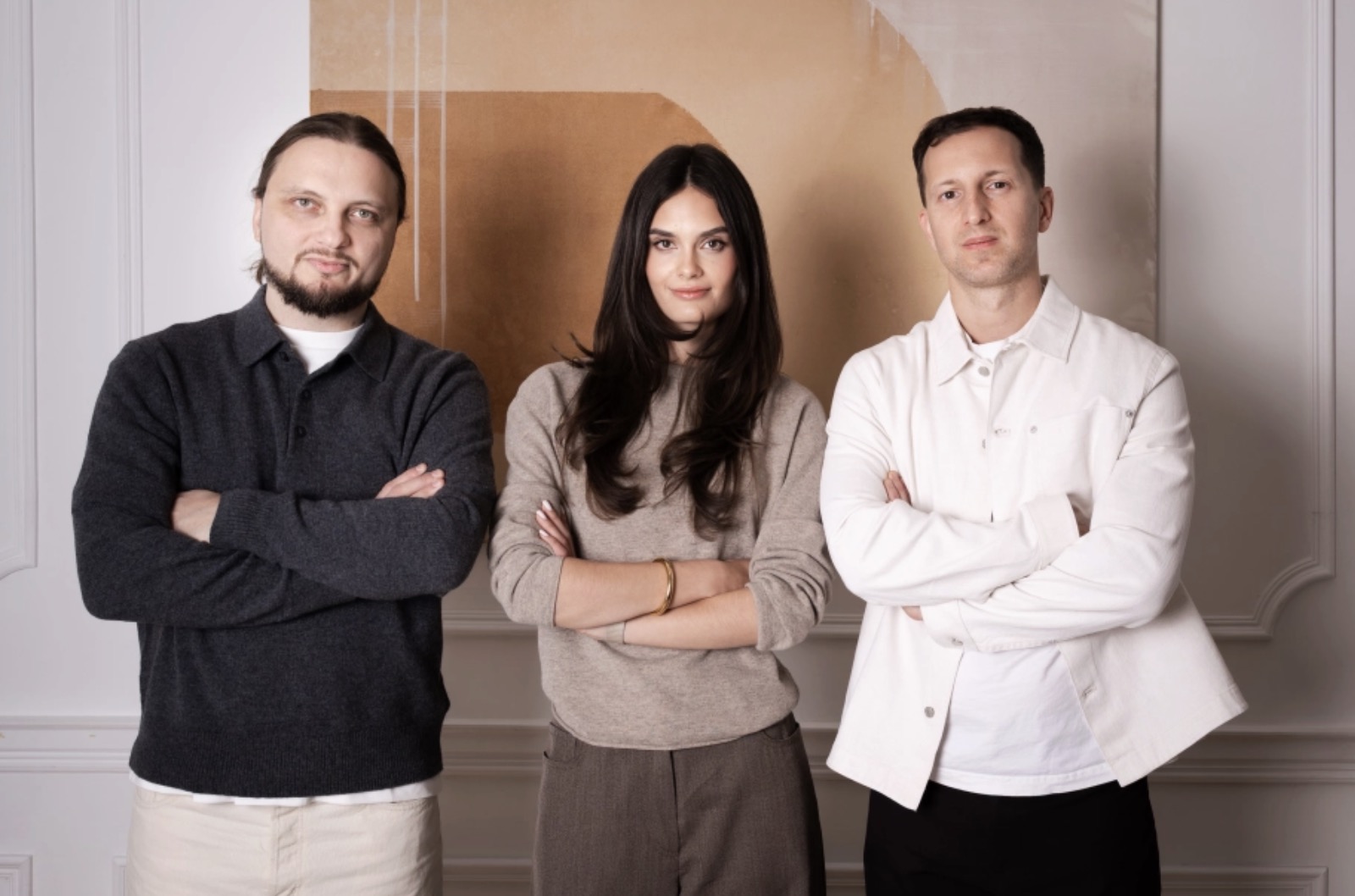
I’m writing this from a small apartment in San Francisco. The two co-founders I’m building this company with, Paweł Chrzan and Paweł Sobkowiak, are in Warsaw. Between us, depending on the day, are a nine-hour time zone difference, three Slack channels, and one very long shared belief: that the way most people experience health at work is broken, and that we know how to fix it.
Today I get to share that we’ve raised $1.1M in pre-seed funding to do exactly that.
The round was co-led by SMOK Ventures and Movens Capital, with participation from Tomasz Karwatka, Piotr Karwatka, Anna Lankauf, and a small group of operators and angels we’re proud to have alongside us. We’ll use it to build our MVP, develop the AI core that personalizes the Mos protocols, and start our first U.S. deployments through employer benefits programs. The first letters of intent are signed, with Bay Area technology companies who got it the moment they heard it.
If you’ve been following us, thank you. If this is the first you’re hearing of Mos, here’s the longer story.
Why I started this company
I’m a perfectionist. I tried every system. I had the Whoop, the Oura, the supplements, the gym membership, the meal prep, the routine. I’d start strong on a Monday and feel like I’d failed by Thursday. The problem wasn’t that I didn’t care. I cared deeply. The problem was that everything I’d bought was designed for the version of me I wished I were, not the version of me that actually exists. The one that misses workouts when meetings run over. The one that forgets to charge her tracker. The one that ends a hard week feeling lost.
That’s the version we’re building Mos for. Not the optimized self. The real one.
Most of us already know what we should be doing for our health. We just don’t have a system that quietly supports us in actually doing it, inside the life we already have. That gap, between what we know and what we do, is the entire reason this company exists.
What we’re building
Mos is a workplace health system. Two parts, working together.
The first is an AI Health Partner that reads from the data sources you’re already using. Wearables like Apple Watch and Oura. Self-reported check-ins. Lab results. Sleep, nutrition, energy, recovery. The AI builds personalized protocols around your real day, not an idealized one. It learns what you’ll actually do. It adapts when you don’t.
The second is a matched line of supplements, manufactured with our U.S. partner, designed to act as the physical execution layer for the protocol. Most wellness apps stop at recommendations and leave you to figure out the rest. We close the loop. The protocol tells you what your body needs. The supplement is already on the way.
The thing that ties it together is what we call the Win Loop. Mos notices when you feel and perform better, identifies what you actually did to get there, and locks that pattern into your future days. One good week stops being an accident and becomes a foundation.
The team
Three of us founded Mos.
Paweł Chrzan, our co-founder and Chief Product Officer, is in Warsaw. He and I built Wellbee together before this. He spent years in product and growth roles at Booksy, Facebook, and Google. He was a competitive distance runner in Poland before he was a tech executive, which I think is part of why he’s so good at this work — he understands what it feels like when your body and your work stop being on speaking terms. He leads the product, which is the part of the system that has to fit inside a real human’s actual day.
Paweł Sobkowiak, our co-founder and Chief Technology Officer, is also in Warsaw. He was previously CTO at Booksy, where he scaled engineering for one of Poland’s most successful consumer technology companies. He’s the reason we can build personalization that actually adapts, instead of the configurable-but-static thing most apps ship and call AI.
We’ve worked together before. We know what each of us is good at, what each of us is bad at, and how to disagree productively at 11pm before a board meeting. That history matters more than people outside founding teams realize. Most of building a company is the conversations you can’t have with a stranger.
Why I moved to San Francisco
I left Warsaw in 2025 to launch Mos in the U.S. I’m proud of being a Polish founder. Poland gave me my first company, my first exit, my education, my closest friends. But Mos is a workplace health system, and the workplace we’re building it for is here. Four reasons.
San Francisco is the AI epicenter. The state of the art in personalization and applied AI is being built here, faster than anywhere else. Mos depends on AI that genuinely adapts to individual bodies and individual lives, not just configures itself once. Being in the room where that work is happening matters. I’m a short walk from the labs, the model providers, and the engineers building the foundations our system runs on.
It’s where people are working at a new intensity. The schedules in the Bay Area are not normal. 11pm Slack messages, back-to-back meetings, transatlantic calendars, on-call shifts that never really end. The same people who are doing the most interesting work in the world are also the ones whose afternoons are unrecognizable from their afternoons two years ago. They’re feeling the change of the times in their bodies before anyone else. They’re our first customers, and the patterns we’ll learn from them will define the product.
It’s an open culture, and a more supportive one than I expected. The thing I didn’t know until I landed is how generous the SF founder ecosystem is with time, introductions, and honest feedback. Other Polish founders here have opened doors for us. American founders I’d never met have taken the meeting. The willingness to help a new company find its footing is real, and it’s specific to this place.
It’s already focused on health. SF has a head start on the cultural shift the rest of the country is now starting to feel. Longevity, wearables, recovery, performance: these aren’t fringe topics here. They’re dinner conversation. Customers don’t need to be convinced that their afternoon energy or their sleep or their post-meal walk matters. They already believe it. They just don’t have a system that makes it happen.
Who’s behind us
We’ve been lucky to assemble investors and advisors who understood what we were building from the first conversation.
SMOK Ventures and Movens Capital co-led the round. Both funds have a history of backing CEE founders into U.S. markets, and both moved fast. Borys Musielak at SMOK has said publicly that the decision to invest came within days of meeting us. That kind of conviction matters when you’re early.
Our angel investors include Tomasz Karwatka, Piotr Karwatka, and Anna Lankauf. Three operators whose experience in commerce, scaling, and product is directly relevant to what we’re doing.
On the advisor side, we’re working with Misa Beach, formerly of OpenAI, as our commercial advisor. And Dr Oliver Zolman, one of the world’s leading longevity physicians and the co-creator of the Blueprint Protocol with Bryan Johnson, joined as our medical advisor. Dr Zolman is responsible for the clinical and scientific rigor underneath every protocol Mos builds. We could not have asked for better people in those seats.
What’s next
The next twelve months are about three things.
We’re shipping the MVP and onboarding our first cohort of U.S. employer customers. The early deployments will be with Bay Area technology companies, where the pattern of long meetings, late nights, and rising healthcare costs creates urgency we can match.
We’re deepening the AI. The personalization engine gets better with every protocol delivered, and we’re building the data infrastructure that makes Mos genuinely adaptive, not just configurable.
And we’re hiring. We’re looking for product designers, AI engineers, behavior scientists, and a small early go-to-market team in San Francisco. If you’ve ever wanted to work on consumer health that takes the workday seriously, please get in touch.
Thank you
To everyone who’s been part of this journey so far: our team, our investors, our mentors, our advisors, our partners, and the early customers who said yes before we had everything figured out. Thank you for the trust, in both me and in Mos. The conversations I’ve had over the last twelve months have shaped not just the company but how I think about what we’re doing.
We’re just getting started.
— Pati