
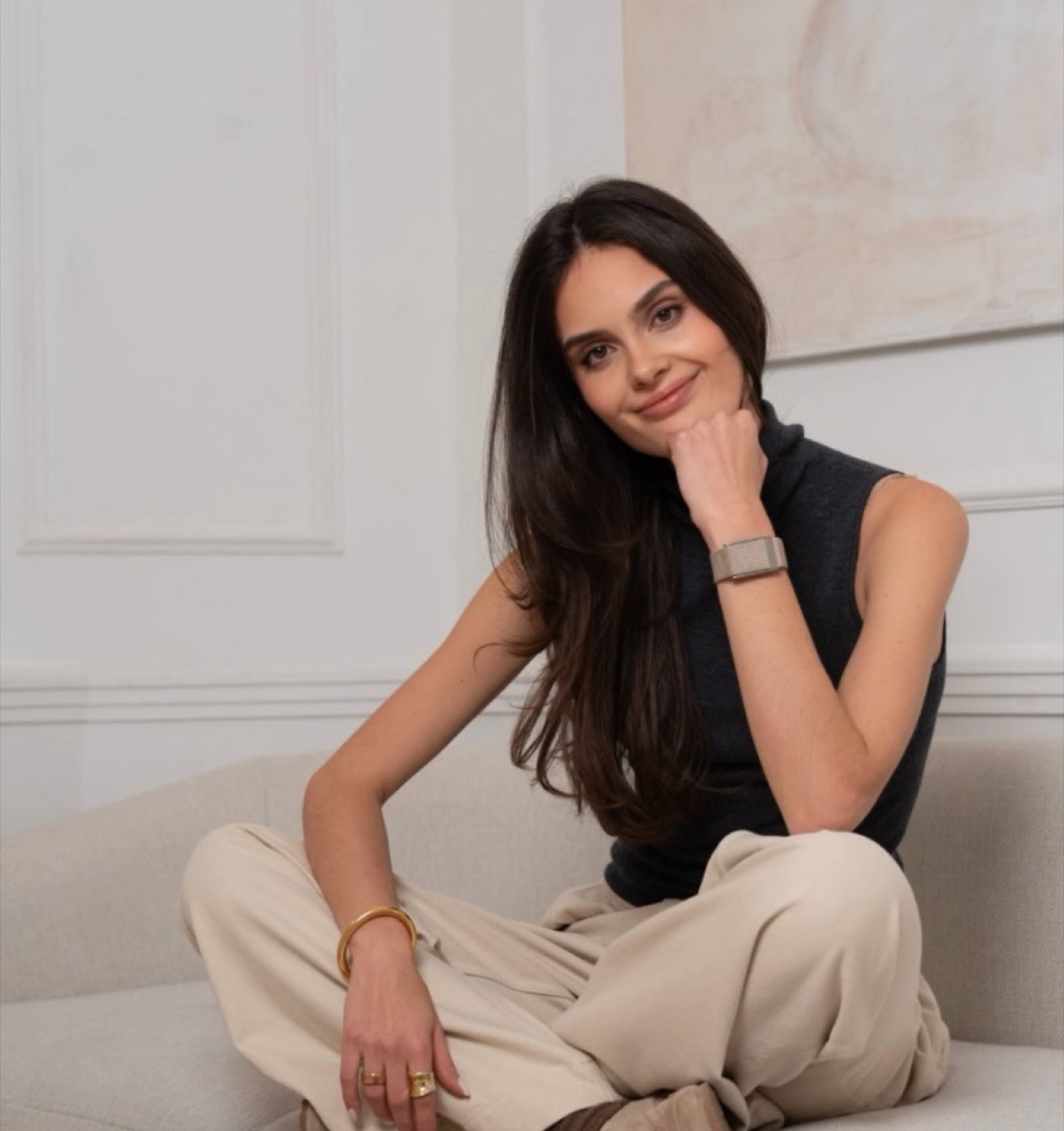
Most of us already know what we should be doing for our health. We just don’t have a system that quietly supports us in actually doing it, inside the life we already have. That gap, between what we know and what we do, is what Mos Health is built for. This is the story of how I learned to stop trying to fix it with willpower.
I’m the founder of a preventive health company. My $399 Whoop has been dead for almost a month.
Here’s what keeps happening. I go to the gym. I work out. Halfway through the run I look at my wrist. Oh no, still dead. No data from this workout either. I get home, I shower, I answer emails, and I completely forget to charge it. Again.
This isn’t about not caring. I care deeply. I’m literally building a company around preventive health. But caring doesn’t bridge the gap when the gap is memory.
For a long time, I thought the problem was me. I’m a perfectionist. I always have been. I’d start a new routine on a Monday, full of conviction. I’d track everything. I’d pre-make the meals, set the alarms, lay out the gym clothes the night before. By Thursday I’d miss something. A meeting would run over. A flight would land late. The system I’d built for the ideal version of myself would meet the actual version of myself, and the actual version would lose.
And then I’d spiral. Not because I’d missed a workout. Because I’d “failed.”
That cycle, repeated for years, taught me something I think most health companies have wrong. The problem isn’t willpower. The problem is systems built for ideal lives instead of real ones.
That insight is what Mos Health is built on.
The Whoop on the nightstand
When I tell the Whoop story now, people laugh. The founder of a preventive health company can’t keep her own tracker charged. It’s a good joke. But I think it’s also the most important thing I’ve learned in three years of building this company.
We buy these devices because we genuinely want to change. The Whoop, the Oura, the supplements, the gym membership, the meditation app. The purchase feels like commitment. Like we’re finally taking ourselves seriously.
And then life happens. Meetings run over. Something urgent pushes out something important. “Charge your Whoop” loses to everything screaming louder. By the time we remember, we’ve already broken the streak, and breaking the streak feels worse than not starting at all.
We keep designing health interventions that require us to be the best version of ourselves. Disciplined. Organized. Consistent. The marketing copy assumes a person who has 90 minutes a day, a quiet morning, a forgiving calendar, a partner who handles dinner. The data shows that person doesn’t really exist, not for most of us, not most weeks.
We need health interventions designed for the version of us that forgets.
That’s the version Mos is built for.
Coming to San Francisco
I moved to San Francisco from Warsaw to build this company. It is not a small thing to leave the country you grew up in to start something. Poland gave me my first company, my first exit, my education, most of my closest friends. SF gave me access to a market that adopts health technology faster than anywhere else, an investor base that understands behavior change, and a customer who would actually pay to fix the problem.
It also gave me, for the first time in my life, jet lag that I couldn’t muscle through. I would land on a Sunday, push through to a Monday morning meeting, and feel my body protest in ways it had never protested before. My skin changed. My sleep changed. My energy at 3pm was unrecognizable from my energy at 3pm a year earlier.
I was 27 years old, eating well, working out, doing all the right things. And I felt worse.
This is the part of the founder story I hadn’t planned to share. But I think it’s the most important. Mos didn’t come from a thought experiment. It came from watching my own body tell me, in increasingly direct language, that the way I was working was incompatible with the way I wanted to feel. And realizing that nothing I’d bought, downloaded, or signed up for was actually helping.
The gap between what I knew and what I did kept getting wider. The harder I worked, the wider it got.
What I learned from a Tuesday wine bar
Last month I sat at a wine bar with a few friends for three hours on a random Tuesday. When I got home, I had a brief moment of feeling bad about it. The health tech founder thing. Not working out, drinking wine.
But the thing is, that evening felt better for my body than most. Calmer nervous system. Deeper sleep. A version of me at the breakfast table the next morning that I hadn’t seen in weeks.
There’s actual science behind this. The Harvard Study of Adult Development tracked 2,000 people over 85 years, the longest study on human happiness ever conducted. The finding that surprised everyone: the people who were most satisfied in their relationships at age 50 were the healthiest at age 80. Not the wealthiest, not the most disciplined, not the ones with the cleanest diets. The ones with the deepest connections.
We talk endlessly about moving your body and eating healthy. We don’t talk nearly enough about social health. Tuesday with friends. The unhurried dinner. The walk where the conversation matters more than the step count.
A real preventive health system has to make room for this. Not as a cheat, not as a reward, but as core infrastructure. Mos has to be the kind of system that doesn’t just notice when you skipped the gym. It also notices when you spent three hours laughing with people you love, and recognizes that for what it is.
That is also the practice.
Why now, why this
I’ve been sitting on a quote for months. I won’t repeat it because the framing matters more than the words: most of us already know what we should be doing. We just don’t have the system that quietly supports us in doing it, consistently, realistically, within the life we already have.
What I also believe is that the technology we have now finally makes this possible in a way it never was before.
Real personalization. Understanding of each individual body, each routine, each person trying to keep up with work and life at the same time. The wearable data is finally rich enough. The AI is finally good enough to read it. The integrations into the calendar, the messaging tools, the actual flow of the workday, are finally close enough to seamless that health can live inside the life instead of asking the life to make room for it.
For most of human history, “be healthy” has meant “build a separate practice and protect it.” Run before work. Cook on Sunday. Meditate at 6am. The healthy people were the ones who could carve out the time.
I don’t think that’s the model anymore. I don’t think it should be.
The model we’re building at Mos is different. Health doesn’t live in a separate app you have to remember to open. It lives in the calendar that’s already running your day. It lives in the small moments between meetings. It lives in a system that adapts to your real schedule, learns from what you actually do, and quietly steers you toward the version of your day that leaves you feeling better at 7pm than you did at 7pm yesterday.
Not another reminder to be better. A system that makes being better just what happens.
What we’re really building
Mos is a workplace health system. The product description is true. But it’s not the whole truth.
What we’re really building is a different relationship between work and the body. For thirty years, the productivity story has been: work harder, optimize more, sacrifice the soft stuff because the hard stuff matters more. That story produced a generation of high performers who got everything they wanted and felt terrible while having it.
The next chapter is something else. The next chapter is that the soft stuff was never soft. Sleep, light, movement, food, connection, these are the inputs to every meeting you walk into. They are the foundation, not the reward. A company that takes them seriously gets a different kind of work out of its people. A person who takes them seriously gets a different kind of life.
I co-founded Mos with Paweł Chrzan and Paweł Sobkowiak because we’d all watched, in our previous companies, what happens when you build for the user that exists instead of the user the marketing imagines. Wellbee, the mental health platform we built before this, taught us that. We’re applying the same instinct here, on a bigger surface.
We raised $1.1M in our pre-seed from SMOK Ventures and Movens Capital, with a group of angels who understood what we were trying to do. Dr Oliver Zolman, one of the world’s leading longevity physicians, joined as our medical advisor. Misa Beach, formerly at OpenAI, came on as our commercial advisor.
We’re early. We’re imperfect. My Whoop is, at this exact moment, still dead.
But I think we’re building the thing I needed five years ago. And from the conversations I’m having with founders, executives, HR leaders, and people who just want their afternoons back, I don’t think I’m the only one.
If you’ve ever bought a piece of health technology and watched it sit unused, this is for you.
If you’ve ever felt like a failure for missing a Tuesday workout, this is for you.
If you know what you should be doing and you’re tired of fighting yourself to do it, this is for you.
Mos is the system I wish I’d had. We’re building it as fast as we can.
I’ll let you know when I get the Whoop charged.
— Pati
About Pati Brzozowska
Pati is the founder and CEO of Mos Health. She previously was COO and founding team member of Wellbee, a Polish workplace mental health platform acquired by Benefit Systems in 2024. She is based in San Francisco, where she leads Mos’s go-to-market in the United States. Pati holds a degree from SGH Warsaw School of Economics and is a frequent writer and speaker on the future of preventive health, behavior change, and how AI is rewriting what’s possible for workplace wellbeing.